
 Parenting Tips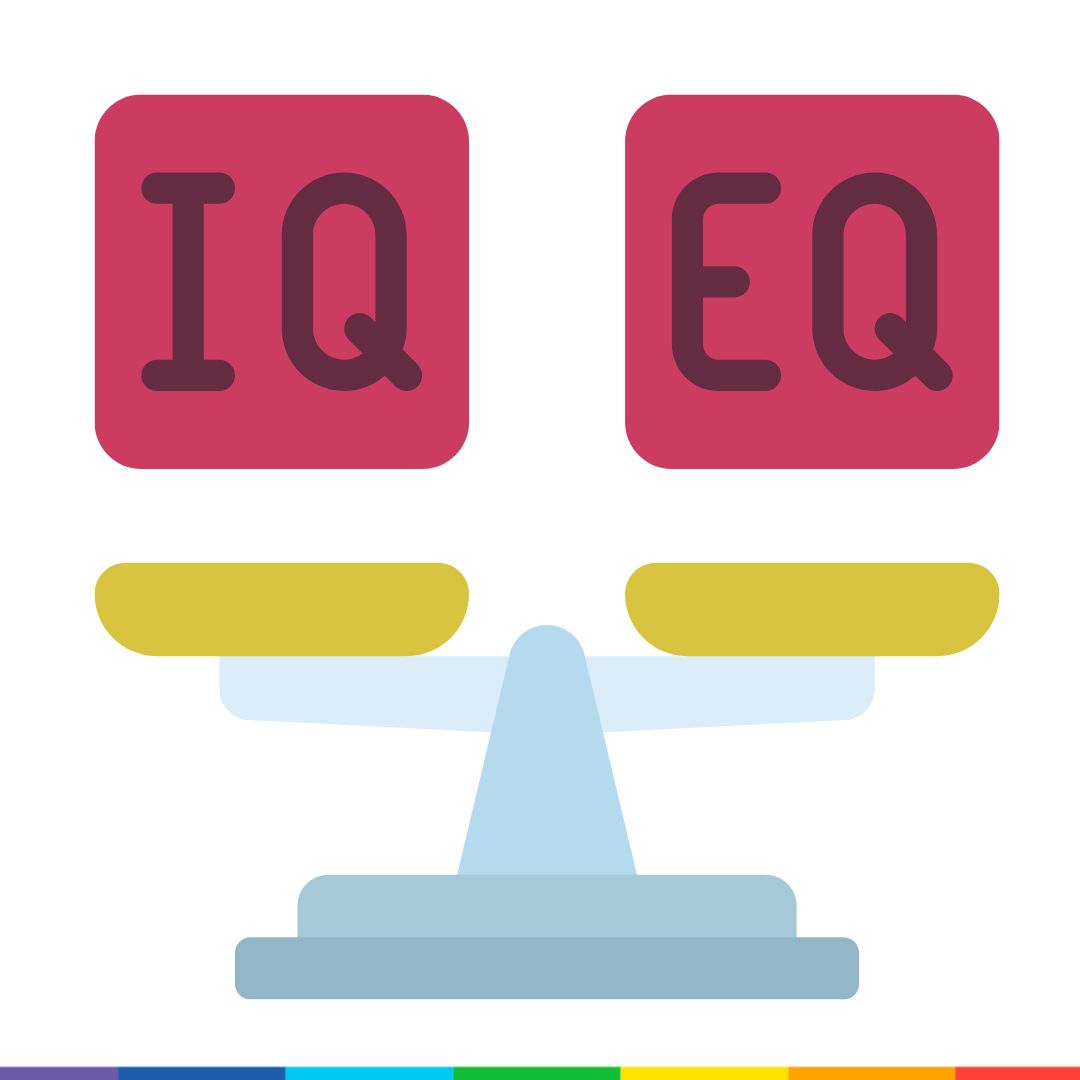
Parenting Tips
Easy Guide on Why Emotional Intelligence Matters More > IQ
June 8, 2026
Related
Topics

Hey
-

Modeling Emotional Intelligence as a Parent – Easy Realistic Tips
September 8, 2026
-

‘Name It to Tame It’ — How to Build Child’s Emotional Vocabulary
August 19, 2026
-
The 5 Super Steps of Emotion Coaching — Your Practical Guide
August 5, 2026
-
The 4 Famous Parenting Styles — Which One Is Yours?
June 22, 2026
-
Ready for more?
Hey
Sign up for Rainbow Kiddies newsletters for more stories and updates
What is emotional intelligence and why does it matter more than IQ for your child’s future? If you’re a parent, you’ve probably wondered: “Am I raising a child who will thrive — not just in school, but in life?”
For decades, we believed the answer lay in IQ. Get them reading early. Drill math facts. Enrich, enrich, enrich. But a quiet revolution in psychology has turned that assumption on its head. The research is now overwhelming: emotional intelligence (EQ) is a stronger predictor of lifelong success, mental health, and relationship quality than cognitive intelligence alone.
This post is the first in a 5-part series on raising an emotionally intelligent child — all grounded in peer-reviewed psychology research, not opinion. Let’s start with the fundamentals.
What Is Emotional Intelligence?
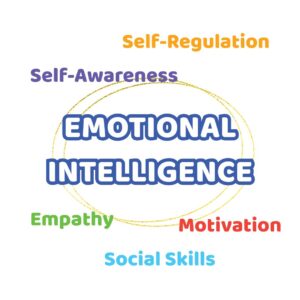
The term was popularised by psychologist Daniel Goleman in his 1995 landmark book Emotional Intelligence: Why It Can Matter More Than IQ. Goleman identified five core domains that make up emotional intelligence:
- Self-Awareness — Recognising your own emotions as they happen
- Self-Regulation — Managing your emotional responses in healthy ways
- Motivation — Using emotions to stay focused and persevere toward goals
- Empathy — Understanding and tuning into the emotions of others
- Social Skills — Building and maintaining healthy relationships
When a 4-year-old can say “I feel frustrated because my tower fell down” instead of throwing blocks across the room — that’s self-awareness and the beginning of self-regulation. When a 7-year-old notices a friend looking left out at recess and invites them in — that’s empathy and social skills in action. These are not “soft” skills; they are skills with a measurable neurological foundation.
The Brain Science: Why EQ Is Built, Not Born
Dr. Dan Siegel, clinical professor of psychiatry at UCLA and author of The Whole-Brain Child, explains that young children operate primarily from their “downstairs brain” — the limbic system, including the amygdala, which reacts impulsively to strong emotions. The “upstairs brain” — the prefrontal cortex, responsible for reasoning, impulse control, and perspective-taking — takes decades to fully mature (well into the mid-20s).
Here’s what’s empowering for parents: every conversation you have with your child about feelings is physically wiring their upstairs brain. This is what neuroscientists call experience-dependent neuroplasticity. When an adult helps a child name and process an emotion, neural connections between the reactive amygdala and the reflective prefrontal cortex get stronger. Further, over time, the child’s brain learns to pause between feeling and reacting.
The Harvard Center on the Developing Child frames this through the concept of “Serve and Return” — the back-and-forth interactions between a child and a caring adult that literally shape brain architecture. When your child “serves” an emotional bid (a cry, a frustrated sigh, an excited squeal) and you “return” it with an attuned, responsive interaction, you are building the neural scaffolding for emotional regulation.
The Proof: What the Research Shows About Emotional Intelligence
This isn’t feel-good theory. The data is compelling.
The CASEL meta-analysis (Durlak et al., 2011) examined 213 school-based Social and Emotional Learning (SEL) programs involving over 270,000 students. The results? Students who participated in evidence-based SEL programs demonstrated an 11-percentile-point gain in academic achievement compared to peers who did not. Think about that: teaching children to understand and manage their emotions boosted their academic performance — not just their behaviour.
Yale University research (2023), published in Child Development, confirmed that students in SEL programs “do better in school, academically and socially” — demonstrating improved well-being, reduced emotional distress, and better perceptions of school safety.
Gottman, Katz, and Hooven’s (1996) longitudinal study, published by the American Psychological Association, followed children from age 5 to 8 and found that children whose parents practiced Emotion Coaching showed:
- Better physiological regulation (healthier vagal tone and lower stress hormones)
- Stronger ability to down-regulate negative emotions
- Better academic performance
- Fewer behavioural problems
- Lower rates of infectious illness
In a 2024 systematic review published in BMC Psychology, researchers examined emotional intelligence’s impact on academic achievement and psychological well-being across multiple countries and found that “emotional intelligence was positively related to positive psychological characteristics, psychological well-being, and academic achievement.”
As clinical psychologist Dr. Lisa Firestone puts it: “When kids have high EQ, there’s evidence that they do better in school, with peers, and with teachers.”
NAEYC (National Association for the Education of Young Children) summarizes the research clearly: “Children with higher emotional intelligence are better able to pay attention, are more engaged in school, have more positive relationships, and are more empathic.”
Why This Matters for Your Child’s Future
A 2015 OECD report on social and emotional skills in childhood and their long-term effects on adult life found that childhood emotional competencies predict adult outcomes including employment stability, mental and physical health, relationship satisfaction, and reduced likelihood of engaging in criminal behaviour.
In a world increasingly shaped by AI and automation, the uniquely human skills — empathy, collaboration, resilience, and emotional regulation — are becoming more valuable, not less.
What Comes Next
In Part 2, we’ll explore Dr. John Gottman’s research identifying the four parenting styles — and one specific style (Emotion Coaching) that consistently produces emotionally intelligent, resilient children. You’ll also get a self-assessment framework to identify your own default style. (Though we had published on this earlier, this will be a much more structured version.)
Sources Referenced in Part 1
- Goleman, D. (1995). Emotional Intelligence: Why It Can Matter More Than IQ. Bantam Books.
- Siegel, D. J., & Bryson, T. P. (2012). The Whole-Brain Child: 12 Revolutionary Strategies to Nurture Your Child’s Developing Mind. Delacorte Press.
- Center on the Developing Child, Harvard University. “Serve and Return.” developingchild.harvard.edu
- Durlak, J. A., Weissberg, R. P., Dymnicki, A. B., Taylor, R. D., & Schellinger, K. B. (2011). “The Impact of Enhancing Students’ Social and Emotional Learning: A Meta-Analysis of School-Based Universal Interventions.” Child Development, 82(1), 405–432.
- Yale University (2023). “Research Finds Social and Emotional Learning Produces Significant Benefits for Students.” Yale School of Medicine
- Gottman, J. M., Katz, L. F., & Hooven, C. (1996). “Parental Meta-Emotion Philosophy and the Emotional Life of Families: Theoretical Models and Preliminary Data.” Journal of Family Psychology, 10(3), 243–268.
- Firestone, L. (2016). “Why We Need to Teach Kids Emotional Intelligence.” Psychology Today. Psychology Today
- NAEYC (2017). “Teaching Emotional Intelligence in Early Childhood.” NAEYC
- Springer (2024). “Emotional Intelligence Impact on Academic Achievement and Psychological Well-being.” BMC Psychology. BMC Psychology




You may also like
Sign Up for your Free Parenting Guide: “10 Everyday Ways to Raise an Emotionally Strong Child”


