
 Parenting Tips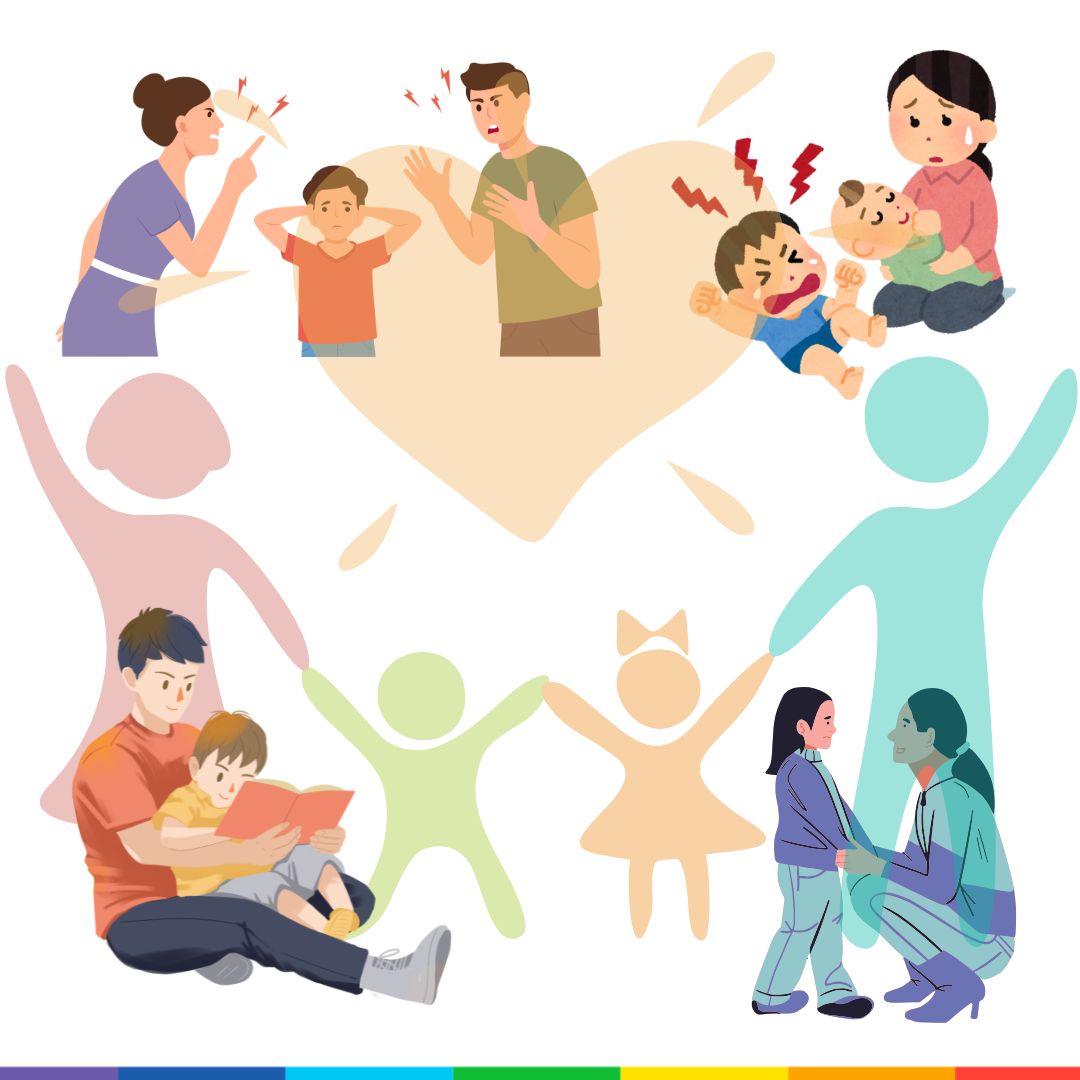
Parenting Tips
The 4 Famous Parenting Styles — Which One Is Yours?
June 22, 2026
Related
Topics

Hey
-

Modeling Emotional Intelligence as a Parent – Easy Realistic Tips
September 8, 2026
-

‘Name It to Tame It’ — How to Build Child’s Emotional Vocabulary
August 19, 2026
-
The 5 Super Steps of Emotion Coaching — Your Practical Guide
August 5, 2026
-
The 4 Famous Parenting Styles — Which One Is Yours?
June 22, 2026
-

Ready for more?
Hey
Sign up for Rainbow Kiddies newsletters for more stories and updates
In our last blog, we mentioned that emotional intelligence is a stronger predictor of lifelong success than IQ — and that it’s built through everyday interactions between parent and child. But here’s the uncomfortable truth: not all parenting styles support EQ development equally. Some actively work against it.
Dr. John Gottman, one of the world’s most influential relationship researchers, spent over two decades studying how parents respond to their children’s emotions. His conclusion? Most parents fall into four distinct styles — and only one consistently raises emotionally intelligent children.
A Brief History: From Baumrind to Gottman
In the 1960s, developmental psychologist Diana Baumrind laid the groundwork by identifying three parenting styles: authoritative (high warmth, high expectations), authoritarian (low warmth, high control), and permissive (high warmth, low control). Her research demonstrated that authoritative parenting produced the most well-adjusted children. We had earlier published a blog on these parenting styles.
But Gottman noticed something missing from this framework. Baumrind’s styles described discipline and expectations, yet they didn’t capture how parents handled the most emotionally charged moments — the tantrums, the fears, the tears. He called this dimension parental meta-emotion philosophy: how parents feel about feelings.
Over two decades of in-depth interviews, home observations, and longitudinal studies at the University of Illinois and the University of Washington, Gottman’s research team identified four distinct emotional parenting styles. Let’s walk through them.

Style 1: The Dismissing Parent — “Just get over it.”
What it looks like: The Dismissing parent treats negative emotions as problematic — something to move past quickly. They may genuinely love their child, but they see sadness, anger, and fear as distractions or obstacles rather than opportunities for connection.
Common Dismissing responses:
- “There’s no reason to be sad. It was just a toy.”
- “You’re fine — stop crying.”
- “Let’s just focus on the positive, okay?”
The hidden message: Your feelings don’t matter. They’re an inconvenience.
What happens to the child: The Gottman research found that children of Dismissing parents learn that their emotions are wrong, inappropriate, or not to be trusted. They don’t develop the vocabulary to describe what they feel, and without that vocabulary, they struggle to regulate those feelings. Over time, these children may suppress their emotions entirely — or act them out in ways they don’t understand.
Style 2: The Disapproving Parent — “You shouldn’t feel that way.”
What it looks like: The Disapproving parent goes a step further than the Dismissing parent. Not only are negative emotions inconvenient — they’re seen as a sign of bad character, weakness, or manipulation. These parents often believe that expressing emotions is indulgent and that children need to be “toughened up” for the real world.
Common Disapproving responses:
- “Stop that right now. You’re being dramatic.”
- “Big boys don’t cry.”
- “You’re just trying to get attention.”
The hidden message: There’s something wrong with you for feeling this way. Toughness means hiding emotion.
What happens to the child: Gottman’s studies showed that children raised with a Disapproving style tend to internalise shame around their emotional experience. They equate emotional expression with weakness. These children often struggle with self-esteem and find it difficult to identify or express their emotional needs — a pattern that can carry into adulthood and affect relationships.
Style 3: The Laissez-Faire Parent — “Anything goes.”
What it looks like: The Laissez-Faire parent (from the French “let it be”) fully accepts all emotional expression — but offers no guidance on how to manage it. They provide warmth and empathy, but they don’t set limits on behaviour or help the child problem-solve. The child is essentially left to navigate the storm of their emotions alone.
Common Laissez-Faire responses:
- “I know you’re angry. You just feel whatever you need to feel.” (without offering any strategy for what to do with that anger)
- No intervention when a child’s emotional behaviour crosses into aggression or disruption
The hidden message: All expressions of emotion are okay — even when they hurt you or others. I won’t help you figure this out.
What happens to the child: According to research by the Talaris Institute and Parenting Counts, children raised with a Laissez-Faire approach often struggle to self-soothe. They find it harder to calm down when upset, have difficulty concentrating, and may not pick up on social cues — making it harder to form and keep friendships. They have emotional freedom without emotional skills.
Style 4: The Emotion Coach — “I see you. Let’s figure this out together.”
What it looks like: The Emotion Coach treats negative emotions as an opportunity — a moment for intimacy, teaching, and connection. Emotion Coaches value all feelings but set clear boundaries around behaviour. They don’t dismiss or punish emotions; they guide their child through them.
Common Emotion Coaching responses:
- “I can see you’re really angry that your tower fell down. It’s okay to feel angry. It’s not okay to throw blocks. Let’s take a deep breath together, and then we can figure out what to do.”
- “You seem nervous about school tomorrow. Tell me more about that.”
The hidden message: All your feelings are valid. I’m here to help you understand them, and I’ll help you learn what to do with them. Watch some of our video stories with your little ones to understand how you can master this parenting style.
The Evidence: Why Emotion Coaching Wins
Gottman’s research didn’t just describe these styles — it measured their impact. In a landmark longitudinal study, Gottman, Katz, and Hooven (1996) followed families from the child’s age 5 to age 8. The findings were striking. Children of Emotion Coaches showed:
- Better physiological regulation — Healthier vagal tone (a measure of the body’s ability to calm itself after stress) and lower levels of stress hormones
- Stronger emotional self-regulation — Greater ability to down-regulate negative emotions independently
- Fewer behavioural problems — Less aggression and acting out
- Better academic performance — Higher achievement in maths and reading
- Stronger immune function — Lower rates of infectious illness
A follow-up study by Katz and Gottman (1997), published in the Journal of Clinical Child Psychology, found something even more remarkable: emotion coaching buffered children against the negative effects of marital conflict. When there was tension at home, children whose parents practiced Emotion Coaching showed fewer behavioural problems and better emotional regulation than peers whose parents had other styles. In other words, Emotion Coaching acted as a protective factor — insulating children from stress that would otherwise predict poor outcomes.
Which Parenting Style Is Yours? An Honest Self-Assessment
No parent is one style all the time. On any given day, you might Dismiss in the morning rush, go Laissez-Faire when you’re exhausted, and Emotion Coach during a quiet bedtime moment. The goal isn’t perfection — it’s awareness.
Here are four reflection questions:
- When my child is upset, my first instinct is to…
- (a) Distract or move on quickly → Dismissing tendency
- (b) Tell them to stop or toughen up → Disapproving tendency
- (c) Listen and empathise, but not intervene → Laissez-Faire tendency
- (d) Pause, connect, and guide → Emotion Coaching tendency
- I believe negative emotions are…
- (a) Usually unnecessary or dramatic → Dismissing
- (b) A sign of poor character or weakness → Disapproving
- (c) Fully acceptable in any form → Laissez-Faire
- (d) A natural part of life and an opportunity for growth → Emotion Coaching
- When my child is angry and shouting at me, I…
- (a) Send them to their room until they calm down → Dismissing/Disapproving
- (b) Punish or scold them for the tone → Disapproving
- (c) Let them express it without boundaries → Laissez-Faire
- (d) Hold the boundary: “It’s okay to be angry. It’s not okay to shout at anyone or break things. Let’s find another way.” → Emotion Coaching
- My child’s tears make me feel…
- (a) Uncomfortable — I want to fix it fast → Dismissing
- (b) Irritated or embarrassed → Disapproving
- (c) Compassionate but unsure what to do → Laissez-Faire
- (d) Connected — it’s a moment to understand them → Emotion Coaching
If you’re like most parents, you’ll recognise yourself in more than one style. That’s normal. Gottman’s research found that even parents who primarily Emotion Coach use other styles about 30% of the time. The key shift is this: can you catch yourself when you slip into Dismissing, Disapproving, or Laissez-Faire mode, and choose a different response?
A Word of Encouragement
If you recognised yourself in one of the less helpful styles, please don’t feel ashamed. Parenting styles aren’t personality flaws — they’re patterns, often inherited from how we were raised. Many Dismissing parents were themselves dismissed as children. Many Disapproving parents grew up in households where emotions were punished.
The research is hopeful: these patterns can change. Gottman’s work demonstrates that Emotion Coaching is a learnable skill — and small, consistent shifts can produce measurable improvements in your child’s emotional regulation, behaviour, and even physical health.
Coming Up in Next Blog
In our next blog, we’ll walk through the 5 Steps of Emotion Coaching — the practical, moment-by-moment framework that transforms emotional meltdowns into teachable moments. You’ll get scripts, real-life scenarios, and the exact language that works for toddlers through tweens.
References
- Gottman, J. M., Katz, L. F., & Hooven, C. (1996). “Parental Meta-Emotion Philosophy and the Emotional Life of Families: Theoretical Models and Preliminary Data.” Journal of Family Psychology, 10(3), 243–268.
- Katz, L. F., & Gottman, J. M. (1997). “Buffering Children from Marital Conflict and Dissolution.” Journal of Clinical Child Psychology, 26(2), 157–171.
- Gottman, J. M., & DeClaire, J. (1997). Raising an Emotionally Intelligent Child: The Heart of Parenting. Simon & Schuster.
- The Gottman Institute. “The Four Parenting Styles.” gottman.com
- Parenting Counts (Talaris Institute). “Four Parenting Styles.” parentingcounts.org
- Baumrind, D. (1971). “Current Patterns of Parental Authority.” Developmental Psychology Monographs, 4(1, Pt. 2), 1–103.
- Katz, L. F., & Windecker-Nelson, B. (2004). “Parental Meta-Emotion Philosophy in Families with Conduct-Problem Children.” Journal of Abnormal Child Psychology, 32(4), 385–398.




You may also like
Sign Up for your Free Parenting Guide: “10 Everyday Ways to Raise an Emotionally Strong Child”


